One of the most common questions we hear from reefers — beginner and experienced alike — is some version of: "Will these two corals get along?" It's a fair concern. Coral aggression is real, and placing incompatible species too close together can lead to tissue necrosis, bleaching, or slow death for one or both animals. This guide breaks down the core concepts so you can build a thriving mixed reef with confidence.
Understanding Coral Aggression: The Basics
Corals are sessile animals competing for space, light, and nutrients on the reef. In the wild, they've evolved a sophisticated toolkit of offensive and defensive weapons. In a closed aquarium, those same weapons can cause rapid damage when the distances that naturally buffer aggression are removed.
There are two primary aggression mechanisms you need to understand:
1. Physical Touch & Sweeper Tentacles
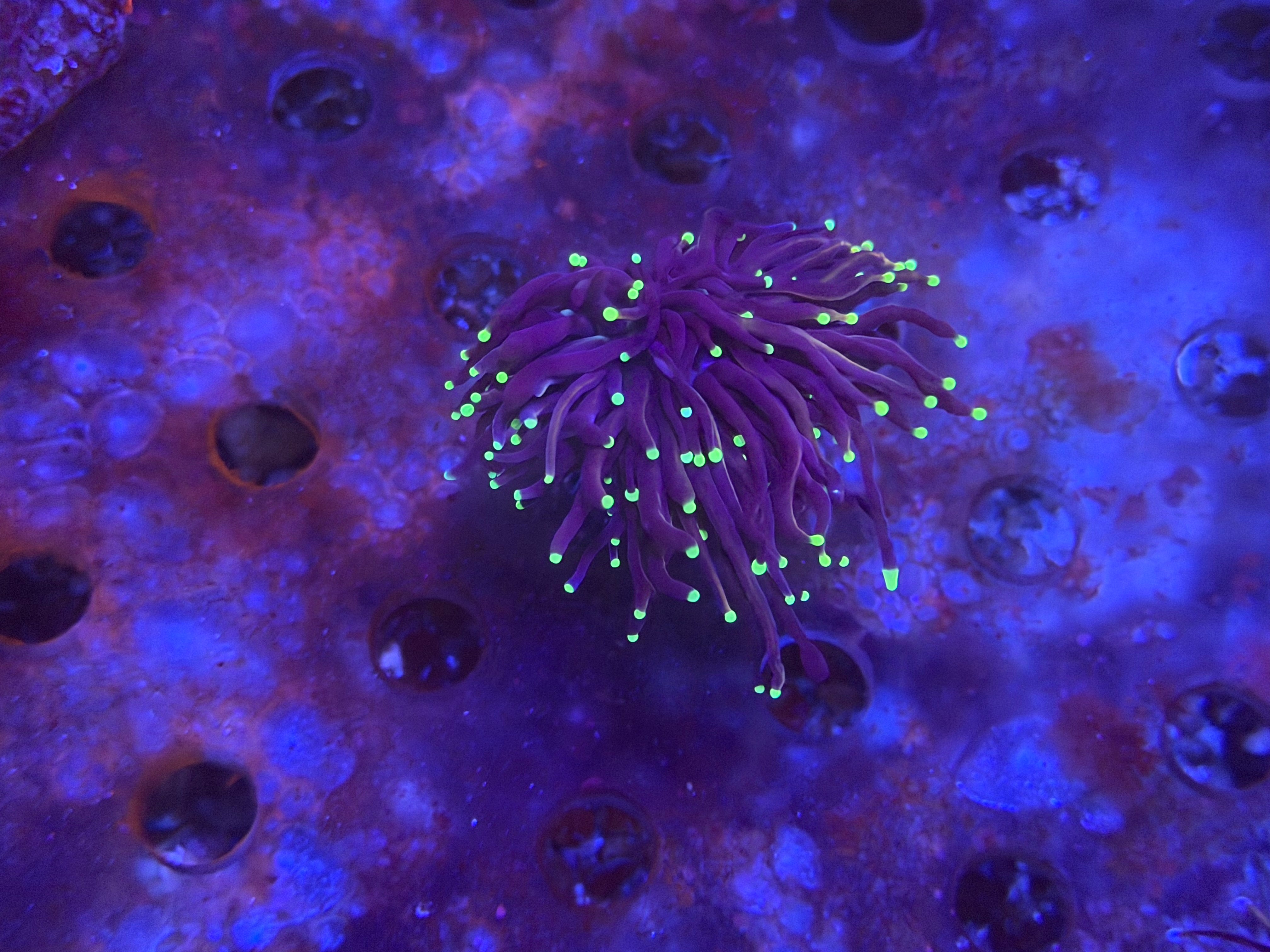
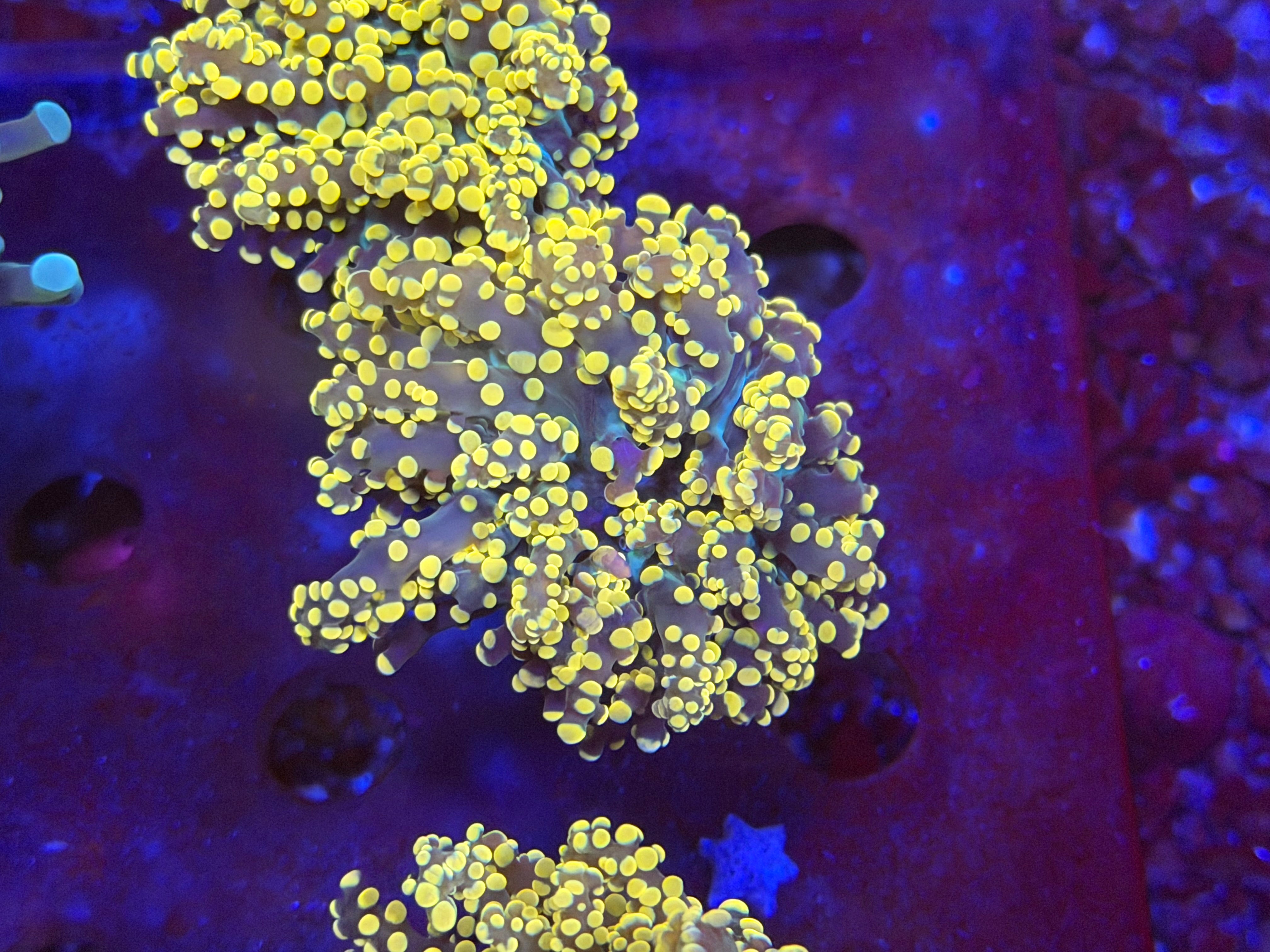
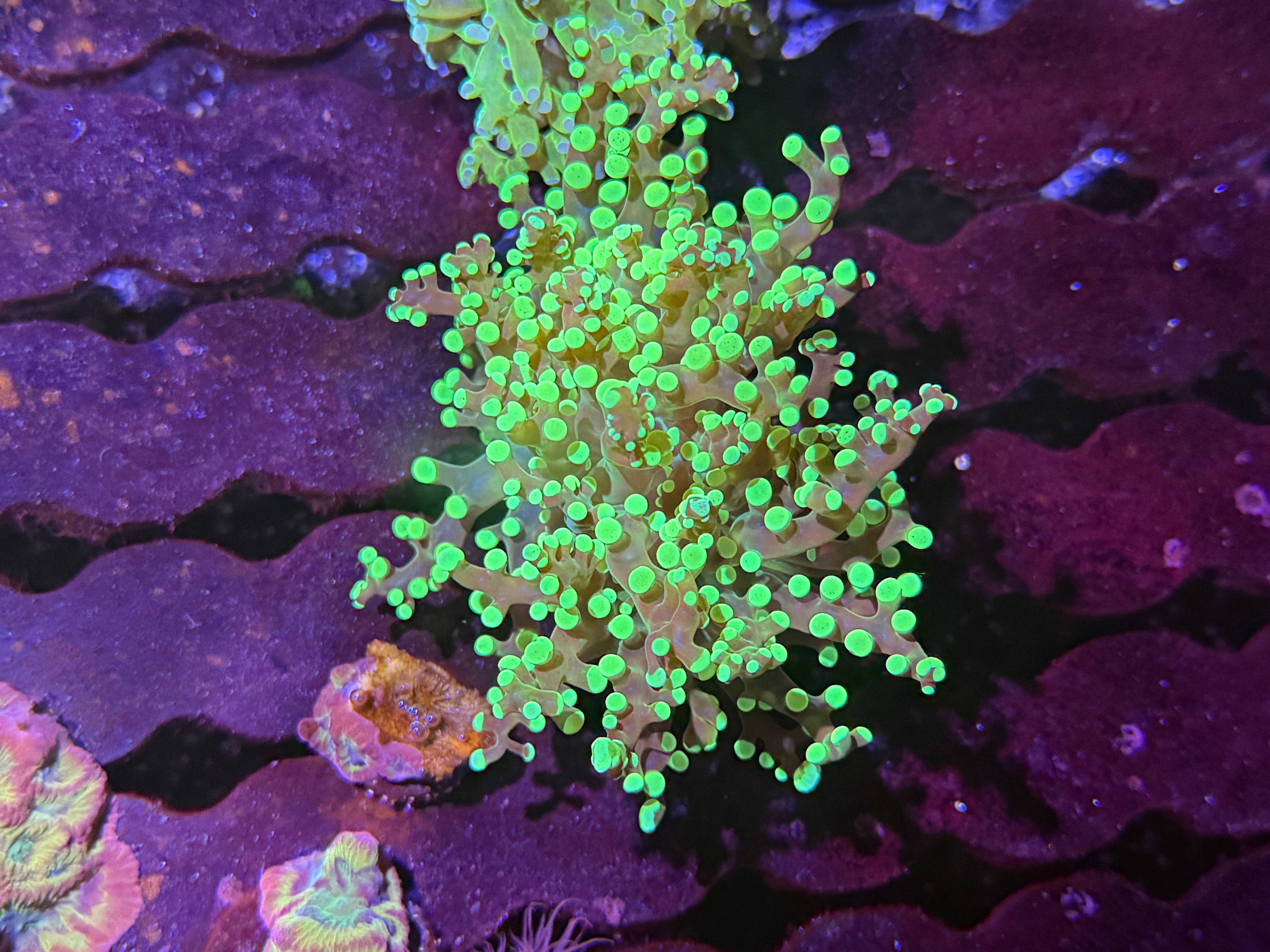
Many LPS corals — such as hammers, torches, frogspawns, and elegance corals — extend long sweeper tentacles at night, often reaching 3–6 inches (7–15 cm) beyond their visible polyp edge. These tentacles are armed with nematocysts (stinging cells) and can cause severe tissue damage to anything they contact.
Key rule: Always measure placement distance from the extended tentacle reach, not just the coral's skeleton or base. A hammer coral that looks 3 inches wide may sweep a 6-inch radius after lights out.
2. Allelopathy (Chemical Warfare)
Soft corals and many LPS species release chemical compounds — terpenes, mucus, and other toxins — into the water column. This is allelopathy, and it can affect corals that are never in direct physical contact. Signs of allelopathic stress include unexplained tissue recession, closed polyps, and poor color in otherwise healthy-looking specimens.
Heavy offenders include:
- Toadstool leather corals — notorious for releasing potent terpenes, especially after a shed cycle
- Sinularia & Lobophytum leathers — similarly aggressive chemically
- Pulsing Xenia — can spread aggressively and affect neighbors
- Mushroom corals — generally hardy but can chemically irritate nearby SPS
Good skimming, activated carbon, and strong water flow help dilute allelopathic compounds. Many experienced reefers run carbon continuously when keeping a mixed reef with leathers and SPS.
Placement Distance: A Practical Framework
There's no single magic number, but these general guidelines give you a working baseline:
- LPS to LPS: Minimum 6 inches between colonies; more if you're keeping known sweepers like hammer or elegance
- LPS to Soft Coral: 4–6 inches minimum; monitor for chemical stress
- Soft Coral to SPS: 6–8 inches minimum; run carbon and watch SPS closely
- SPS to SPS: 3–4 inches is often workable once your tank is stable; some species can grow into each other without issue
- Mushrooms to anything: Keep on a dedicated rock or frag plug isolated from neighboring colonies — they're hardier than they look but can smother neighbors as they spread
These are starting points, not laws. Individual specimen behavior varies, and tank chemistry, flow, and light all influence how aggressively corals respond to one another.
Light & Flow Trade-Offs in Mixed Reefs
Beyond aggression, light and flow compatibility is often what makes or breaks a mixed reef layout. The challenge: many of the corals with different aggression profiles also have different light and flow requirements.
Light Zones
- High light (top of rockwork / close to surface): Most SPS — acropora, montipora, stylophora — thrive here. So do many clams.
- Mid light: Many LPS — hammer, frogspawn, torch, open brain — do well here, with some tolerance in both directions.
- Low light (sandbed or shaded areas): Mushroom corals, blastomussa, favites, and most soft corals are comfortable lower in the tank.
Conveniently, this natural stratification helps with aggression too — keeping soft corals low and SPS high creates both the appropriate light gradient and physical separation.
Flow Requirements
- High, random flow: SPS corals generally prefer strong, chaotic flow to deliver nutrients and prevent detritus accumulation on branches.
- Moderate flow: Most LPS prefer moderate, indirect flow — strong laminar flow can extend sweeper tentacles and increase aggression range.
- Low-to-moderate flow: Mushrooms and soft corals are generally flexible but don't like being blasted by a powerhead.
Random-mode wavemakers are your best friend in a mixed reef — they satisfy SPS flow needs while reducing the chance that LPS sweepers consistently extend in one predictable direction.
Simple Mixed Reef Compatibility Checklist
Before adding a new coral to your tank, run through these questions:
- ✅ What is its maximum sweeper reach? Measure available space accordingly.
- ✅ Is it a known allelopathy producer? If so, is your carbon and skimmer running well?
- ✅ What light level does it prefer? Do you have an appropriate zone available?
- ✅ What flow does it need? Will your current circulation support it without impacting neighbors?
- ✅ What's already nearby? Map out potential aggression vectors before placing — not after.
- ✅ Is it aquacultured? Aquacultured frags are generally hardier, more disease-resistant, and better adapted to aquarium conditions than wild-caught specimens.
Recommended Pairings & Groupings
While individual variation always applies, some groupings tend to work reliably well in mixed reefs:
- Euphyllia colonies together (hammer + torch + frogspawn): These related species often tolerate each other's sting and can be placed as a dedicated "Euphyllia garden" with natural aesthetics.
- SPS shelf: A dedicated upper rock zone with acropora, montipora, and stylophora under strong light and flow, away from chemical producers below.
- Mushroom island: A dedicated rock or plug cluster for mushrooms and ricordea, isolated from neighbors they could smother or irritate.
- Soft coral sandbed: Leathers and soft corals placed low give them appropriate light and keep their chemical output away from SPS.
Shop by Category
Ready to build your mixed reef? Browse our curated collections:
- LPS Corals — hammers, torches, frogspawns, brain corals, and more
- Soft Corals — leathers, Kenya trees, and beginner-friendly soft species
- SPS Corals — acropora, montipora, and stylophora for the experienced reefer
- Mushroom Corals — ricordea, discosoma, and rhodactis varieties
- Aquacultured Corals — sustainably grown frags adapted to aquarium life
Have questions about a specific pairing before you buy? Reach out — our team is happy to help you plan your layout before your order ships.