Why Coral Compatibility Matters
One of the most common questions we hear from reef keepers is: "Which corals can I keep together?" It's the right question to ask before anything goes in the tank. Corals may look static, but they're engaged in a slow, constant battle for space, light, and survival. Understanding how they interact is the foundation of a stable, thriving mixed reef.
This guide covers the four areas that matter most: physical aggression (sweeper tentacles and stinging), chemical warfare (allelopathy), placement and spacing strategy, and balancing light and flow when corals with different needs share the same system.
Physical Aggression: Sweeper Tentacles and Touch Range
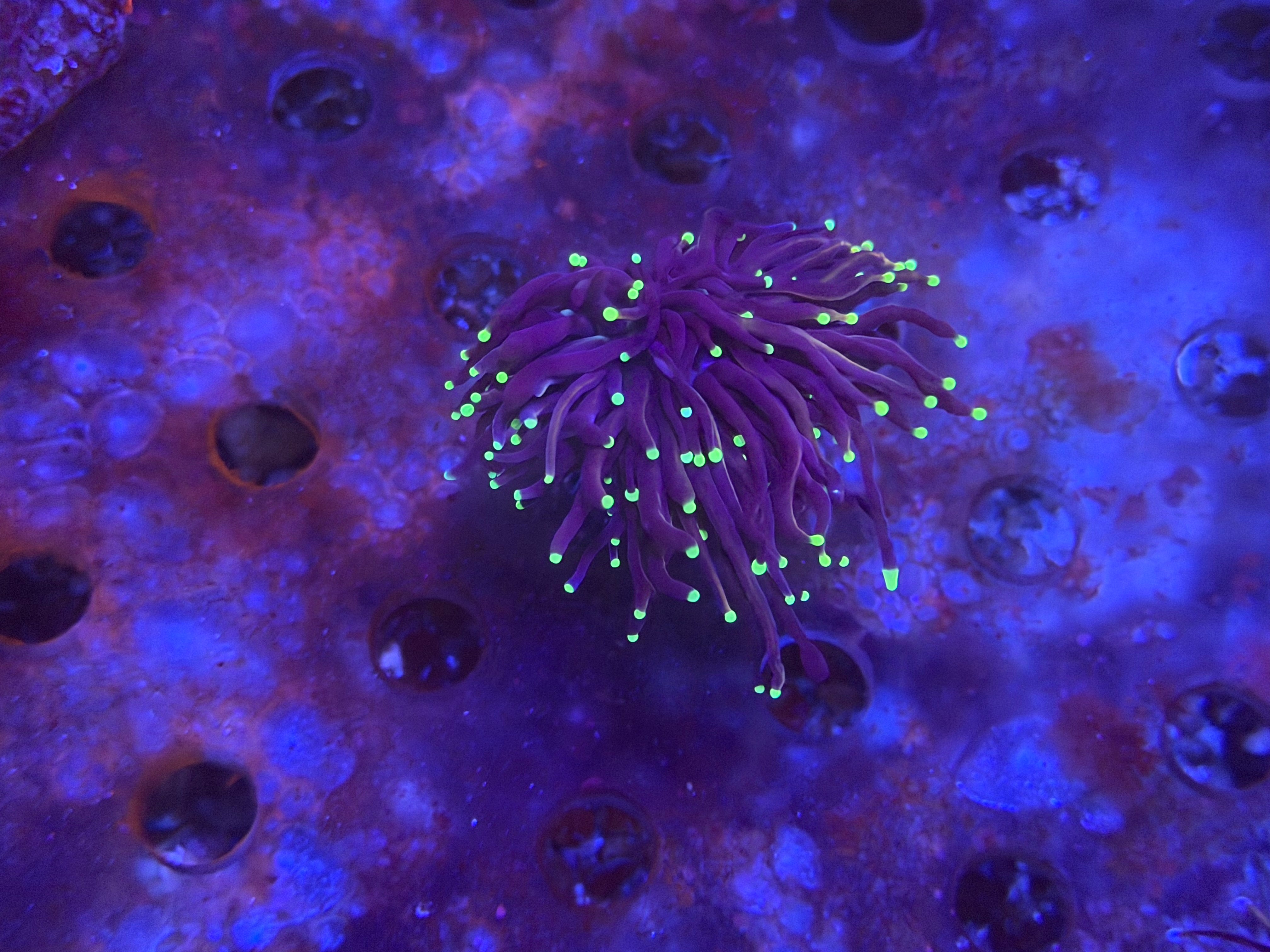
Many LPS corals extend long, stinging sweeper tentacles — especially at night — to defend their territory and attack neighboring corals. The reach of these tentacles varies by species and specimen, but some extend several inches beyond the coral's visible body.
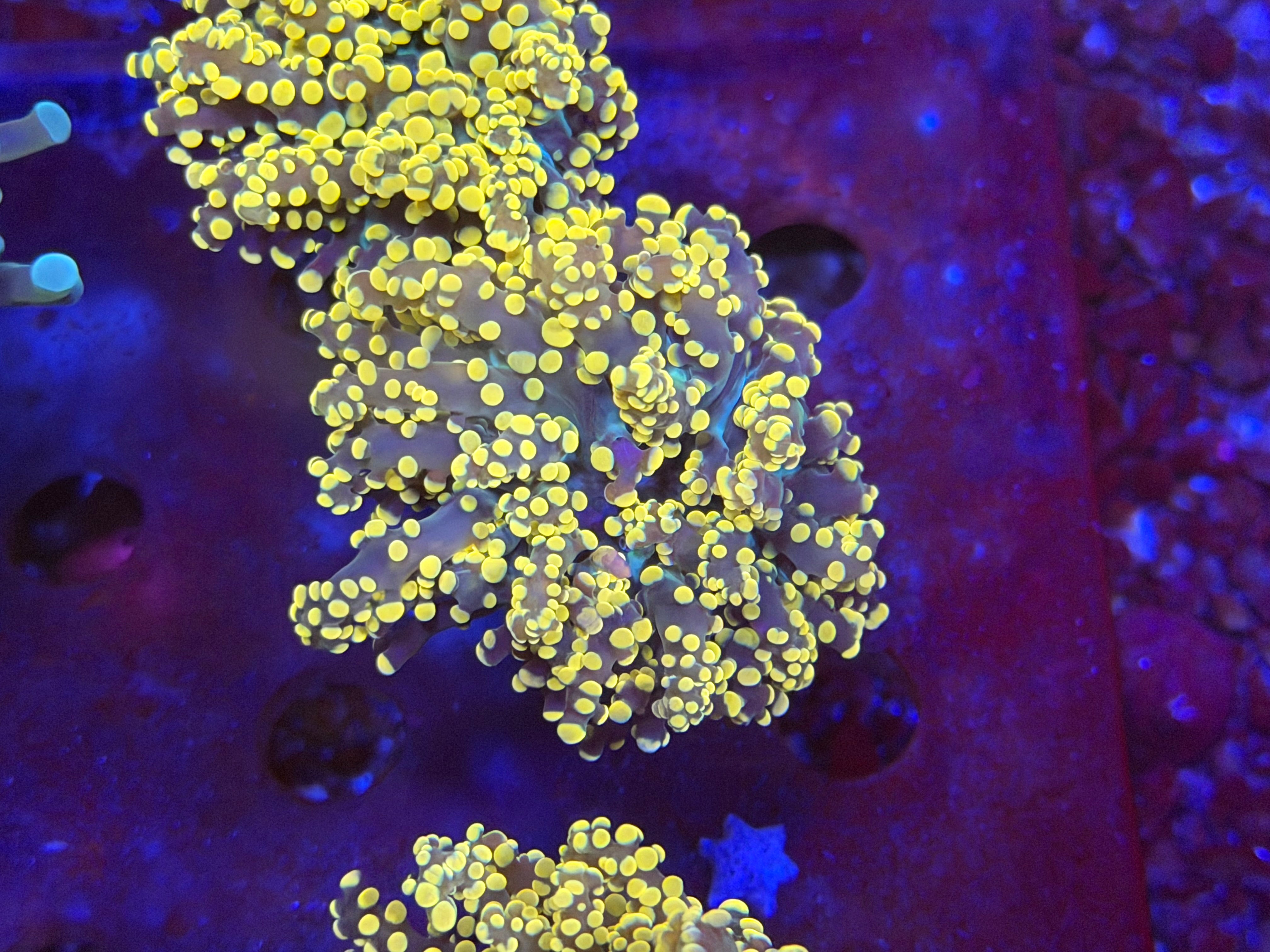
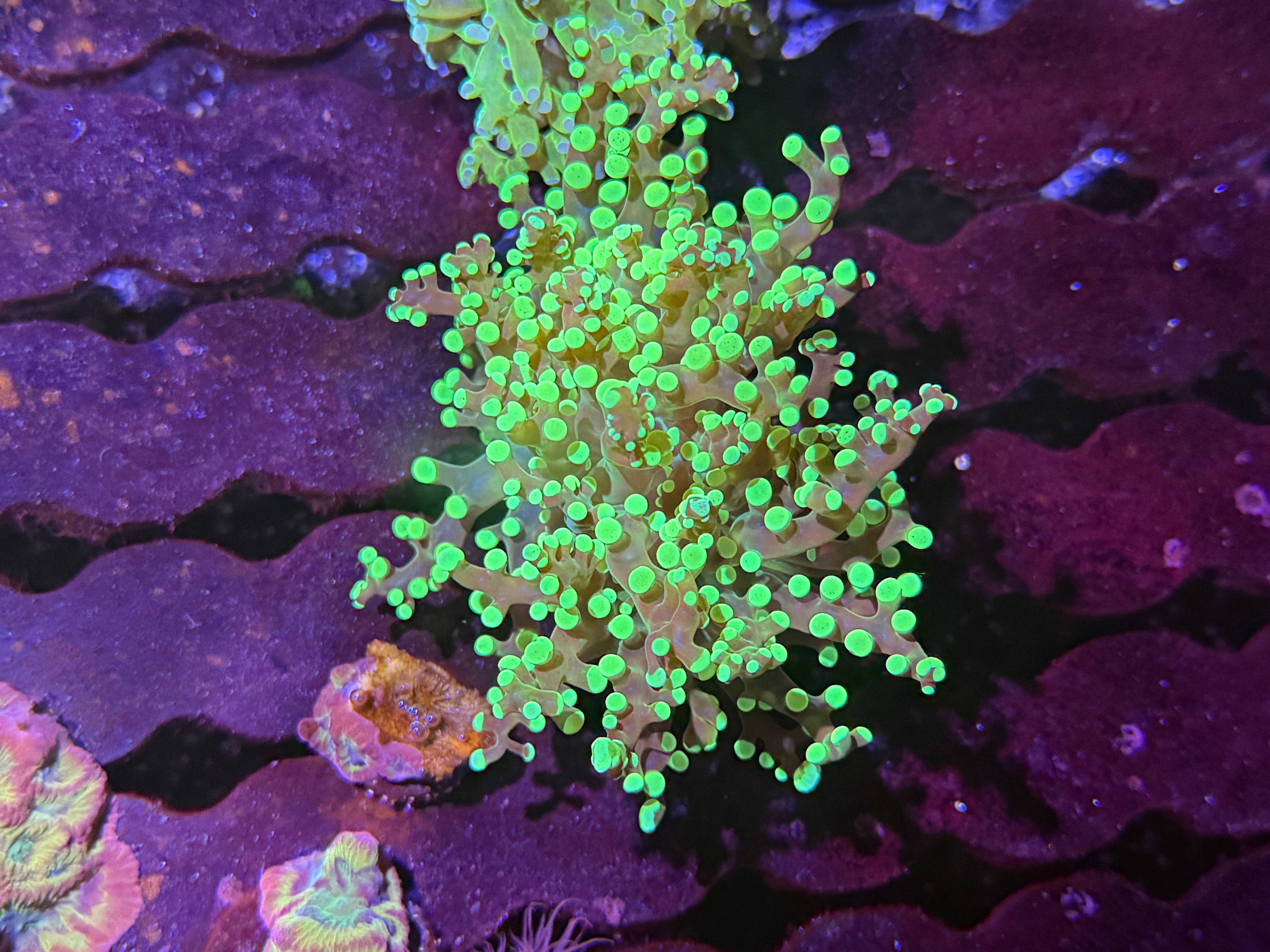
Common high-aggression LPS to be mindful of include hammer corals, torch corals, frogspawn, and elegance corals. These are beautiful centerpiece corals, but they need generous space buffers from other stony corals. Within the same genus (e.g., Euphyllia), many hobbyists find that compatible combinations are possible — though individual specimens can still be unpredictable, and results vary by tank conditions.
SPS corals, including Acropora and Montipora, are generally less aggressive via direct contact, but they are highly sensitive to being stung. Even a brief sweeper tentacle contact can cause tissue recession in SPS. Keep aggressive LPS well away from your SPS corals — a minimum 6-inch buffer is a common starting point, though more space is always better.
Practical rule: Map out your aquascape before placing corals. If two corals' realistic extended reach could overlap, one of them will lose — or both will suffer.
Allelopathy: Chemical Warfare in the Water Column
Physical aggression is visible. Allelopathy — the release of toxic compounds into the water — is not, and it can be more damaging in the long run. Soft corals are particularly well-known chemical warriors. Toadstool leathers, sinularia, and certain other soft corals release terpenes and other compounds that can inhibit the growth of nearby stony corals, irritate tissue, or cause stress responses even when there's no physical contact.
This doesn't mean you can't keep soft corals in a mixed reef — many experienced reef keepers do successfully — but it does mean your filtration and export strategy matters. High-quality activated carbon run continuously (or on rotation) is the most common mitigation. A robust skimmer and regular water changes also help dilute allelopathic compounds before they accumulate.
Mushroom corals also have allelopathic potential, particularly rhodactis and discosoma species at high population density. They're hardy and forgiving in many respects, but should be given their own zone in the tank rather than mixed directly with sensitive SPS or LPS neighbors.
Watch for these signs of allelopathic stress:
- Unexplained tissue recession or bleaching in otherwise stable parameters
- Corals closing up consistently without a clear physical trigger
- Slowed polyp extension in SPS near recently added soft corals
- Increased mucus production
If you suspect chemical warfare, run fresh carbon, increase export, and consider repositioning the corals into distinct zones.
Placement and Distance: Building Zones in Your Aquascape
The most effective way to manage both physical aggression and allelopathy is intentional zonation. Rather than mixing coral types throughout the tank, group corals by category and build buffer zones between groups.
A practical mixed-reef zoning approach:
- SPS zone: Upper rockwork with high flow and intense light. Keep clear of sweeper-tentacle LPS. Aquacultured frags from our Aquacultured Corals collection are a great starting point — they're typically more acclimated to captive conditions than wild-caught specimens.
- LPS zone: Mid-rock or sandy substrate. Give aggressive species (hammer, torch, elegance) enough room that their extended tentacles can't reach SPS or neighbors they're incompatible with.
- Soft coral and mushroom zone: Lower rock, shaded ledges, or a dedicated section of the sandbed. Run carbon if soft corals share water column with SPS.
Flow patterns matter here too. Strong, random flow helps dilute chemical compounds and prevents dead spots, but it also carries stinging cells. Position aggressive LPS corals so that dominant flow directions move water away from, not toward, nearby SPS.
Light and Flow Trade-Offs in a Mixed System
Different coral groups have significantly different light and flow requirements, and this creates real trade-offs in a mixed reef:
- SPS corals generally prefer high light (PAR 200–400+) and high, chaotic flow. Placing SPS high in the tank and near powerheads/wavemakers is standard practice.
- LPS corals span a wide range — some (like acans and war coral) do well in moderate light, while others (like elegance) can be sensitive to intense direct light. Research the specific specimen before placing.
- Soft corals and mushrooms are typically lower-light, lower-flow inhabitants. High flow can cause soft corals to close and stress mushrooms; placing them in calmer, shaded areas prevents this while also limiting their chemical reach into the main water column.
The trade-off is real: you cannot optimize the entire tank for both SPS and low-light soft corals simultaneously. A true mixed reef accepts compromise — creating microclimates within the tank that approximate each group's preferred conditions. The larger and taller your aquascape, the more flexibility you have to create these gradients.
Coral Compatibility Checklist
Before adding any new coral to your mixed reef, run through this quick checklist:
- Identify aggression type. Does this coral have sweeper tentacles? Is it known for allelopathy? What's its approximate reach at night?
- Check its neighbors. What corals are within 6–8 inches in all directions? Are any of them known to be sensitive to the new addition?
- Assess flow direction. If this coral stings or has chemical output, where does the dominant flow carry that output? Are sensitive corals downstream?
- Match light and flow. Is the proposed placement consistent with this coral's requirements? Will it thrive there long-term, not just survive initially?
- Plan for growth. Where will this coral be in 6 months? 12 months? Corals that look well-spaced today can become conflict points as they grow.
- Quarantine first. New additions can carry pests and pathogens. A proper quarantine period protects your entire system, not just the new coral.
- Observe after introduction. Monitor for the first several nights — that's when sweeper tentacles are most active. Watch for stress signals in nearby corals over the following week.
Final Thoughts
A successful mixed reef is the result of planning, patience, and ongoing observation — not luck. Understanding how your LPS corals, SPS corals, soft corals, and mushrooms interact gives you the tools to intervene early and prevent losses before they happen.
Individual specimens and tank conditions vary significantly — what works in one system may not work in another, and even well-documented "compatible" pairings can surprise you. Trust your observation over generalizations, and don't hesitate to rearrange when something isn't working.
If you're building or expanding your collection, browse our Aquacultured Corals — captive-raised frags that tend to acclimate well and come from sustainable sources. Questions about a specific pairing? Reach out — we're happy to help you think through your aquascape before anything goes in the water.